Monday, October 6, 2014

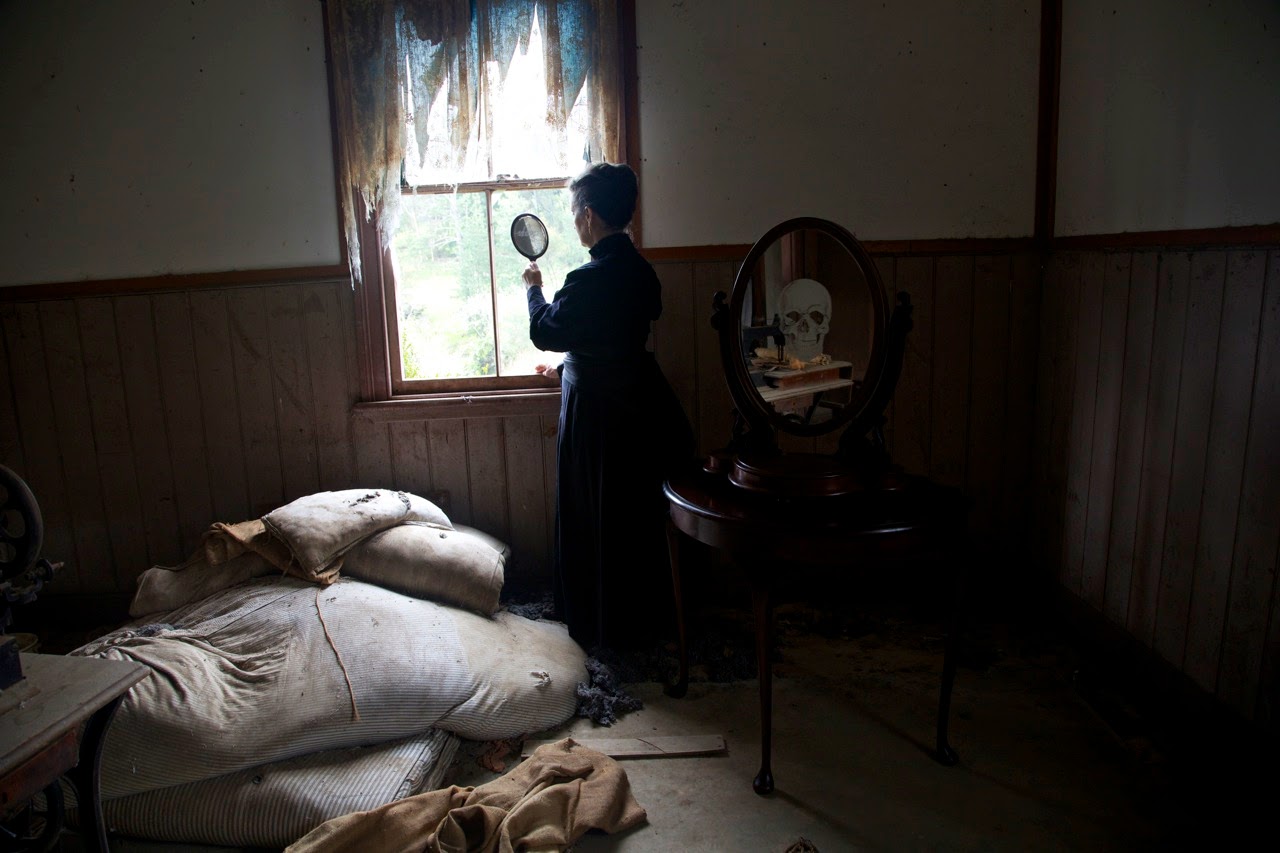
The RUIN of the coloniser

Another shoot in this place that seems to speak to me of so many things. I somehow feel at home amidst all the wombat and swallow shit, rats nests and rotting detritus. Cant explain why but I love the remains of lives that have ben left to decay rather than sentimentally retrieved and sold expensively in Fitzroy antique shops.


I placed selected pieces of my colonial collection amongst the chaos, a tea pot owned by my great grandmother and a ship made in 1864, and when we were taking them out my colleagues said it was hard to tell what was mine and what belonged to the space.


I participated in an amazing masterclass conducted by Patrice Naimbana last week. I was able to place in context some aspects of my relationship with Les that I have never been able to talk about. The Gospel of Othello was the name of the masterclass and with the powerful but gentle encouragement of Patrice we all explored the complexities of race and colonisation in the Shakespeare play. I found resonances I didn't expect. Next post I will explore this. Have to go to work!

Saturday, September 20, 2014

RUIN

A new body of work called RUIN that seems to be about the effects of colonisation.
I went to see The Man who Committed Thought by Patrice Nsaiambana, an extraordinary performance about colonisation among other things. Perhaps it influenced my photo shoot.


Wednesday, September 17, 2014

Making mistakes - BIG ones


I was invited this week to a gathering of people to discuss the barriers for audiences participating in Indigenous arts. A research group commissioned by the Australia Council are doing these meetings and workshops to present their data and to receive comments and feedback from relevant people.
The research was very interesting and one of the big things that came out of the work they have done so far is that non-Indigenous Australians have a fear of participating, wether it be because they are reticent about how they should or should not respond OR what they described as a fear of looking stupid regarding what they don't know.


I found myself arguing that it is not what they don't know that is the source of the fear, but what they DO know, even if it is unconscious or just outside of their awareness. We do know what happened here if not the specifics and it is that uncomfortable knowledge that we avoid coming into contact with. We would rather keep it below the surface and any interaction with Indigenous knowledge, culture or issues threatens to nudge it to the surface. We would rather remain in the dark. (oh and I know I am generalising here so don't be personally offended)

My argument became more and more didactic as I tried to explain what I have been witnessing in myself and others for 30 years and of course what happened was that I BECAME the issue. There were two Indigenous people at the group I was with and instead of listening which is what I KNOW to do, I spoke on and on in an attempt to placate my own discomfort. I came away with a horrible feeling that my shame/guilt was spread all over them. One was a good friend who I have known for many years and I am sad to say I may have damaged that friendship.

It has made me think about my project again and engage with the question, how can my willingness to confront the shame of the past not become yet another thing that Aboriginal people have to deal with.

I think it might be in the area of humour - some way of laughing at myself in it all while not taking away the pointy edge of the project. Any thoughts would be appreciated.

In the dark - I attempt to see.

Clumsy White Woman

KELOID on Taungurung country

I had the opportunity, thanks to some friends, to shoot some video and still photographs in the bush.
I took Isabella's (great grandmother) wind up gramophone and several other props as well as a costume which I found in my fathers favourite antique warehouse. Placing these objects in the landscape felt like a kind of colonisation. They belonged in an uncomfortable way on Taungurung country.

Stranger 1

Sitting and sewing

It also was interesting seeing how uncomfortable it was to wear such clothing and carry heavy Victorian furniture into the bush. I grew up in similar landscapes at the back of Eltham, Wurrundjerri country, when it was still undeveloped and was used to walking through the bush and trying not to leave a footprint, moving through the special spaces with almost no sound. Doing this work I found myself crunching noisily through the bush in the way that I imagine my ancestors did being so unused to and insensitive of this strange land when they arrived from Scotland and Ireland.


Lost and found


Walking in water


Thursday, September 4, 2014

An introduction


Silver spoons
Nan's (mother) hand
She hated being called Nancy. This is her 91 year old hand.
Isabella Robertson- Kelly - Grace Kelly-Stanwix - Nancy Stanwix-Evans,
My great grandmother, mother and grandmother Left to right

I still have the chair that Isabella is sitting on. They are at Eastwood Avenue in Sydney I think. It was the house that Gran lived at later in life, now part of Macquarie University.

Wednesday, September 3, 2014

Pictures not words


Shells and pearls


I have been emptied of words.
So pictures will have to suffice. A wise woman said something about too many words. I can't remember what it was but somehow it echoes. 
For the first time in a long time I am not rushing to the studio. I think I am about to take the studio into the landscape. Watch this space.


Family Jewels


Sunday, August 3, 2014

Aphrodite's tears - spilt in Australia for 200 years


Yesterday morning I was lucky enough to hear an amazing program on Radio National's 360 documentary's called Aphrodite's tears - crying for Kryeniac about a group of Greek and Turkish Cypriots who returned to their homes after being forced to leave them 30 years ago as a result of the Turkish invasion of Cyprus.

It was a very moving documentary however I couldn't help but hear it in the light of my project. One man, close to tears, refused to accept the invitation to visit his former home now occupied by someone else. He said that he wasn't going to have tea in his home and then leave. He would want to stay and take it back from the new occupier. He asked how they had got his home and they replied they had bought it, to which he responded, 'bought it from who!' Later saying that they had bought stolen property.

Joseph Banks collection - photographed by me at the British Museum in London
Banksia
We all sit comfortably in this land knowing we worked hard for our home ownership, however we don't address the question of stolen land. 'Crown land' is still a term that strangely hasn't been investigated given we have a belief we live in a country that respects human rights.


The gentleman in the documentary asks painfully 'what about human rights!' His statement echoes loudly if you have the courage to develop the ears to hear.